
FreeSurvey across Musselburgh and East Lothian
Loft Insulation Musselburgh
Musselburgh is the largest town in East Lothian and one of the oldest in Scotland, built where the Esk meets the Forth. Its homes run from stone cottages in Fisherrow to the large estates added either side of town after the war, and the sea air reaches most of them.
- Free, no-obligation survey
- Written quote, no hard sell
- Musselburgh, Wallyford and Whitecraig
“He took videos to show what was happening in loft and what would be required.” Heather, Trustpilot
Get your Musselburgh loft survey
FreeNo obligationWritten quote
Your details are used only to arrange your survey. See our privacy policy.
- £0
for the survey and written quote, with nothing to pay if the work is not worth doing
- 1 day
is all most lofts take, with the eaves kept clear and the house left tidy
- 7 days
a week, 9am to 7pm. Call free on 0800 433 2068
- 2016
family-run and working across Scotland ever since
Old stone near the shore, newer estates either side
The old heart of Musselburgh grew around the High Street, Fisherrow harbour and the bridges over the Esk, one of them rebuilt on Roman foundations. The houses there are stone, many with slate roofs laid on sarking boards and no membrane, and they sit close to the Forth. The big council and private estates came later, in the second half of the twentieth century, on the eastern and western edges of town.
Those two halves need different things. An older stone house near the shore needs its roof checked before anything else: slates, flashings and the underside of the sarking, especially at the eaves, because salt air and wind off the firth are hard on traditional roofs. New insulation laid under a roof that is letting water in holds the moisture against the timbers.
The estate houses are usually simpler: open lofts, easy access and a single thin layer from years ago. Those are quick, one-day jobs with a clear gain.
Why the eaves matter so much here
A slate and sarking roof stays dry by letting air move through it. Insulating the ceiling makes the roof space colder, so the eaves have to stay open. Close to the sea, where the air carries more moisture, blocking them leads to condensation faster than it would inland. We keep the ventilation path clear with eaves trays and stop the draughts where they actually reach the house, at the hatch and around pipes and cables.
How we insulate a loft, and to what depth
Loft insulation slows heat escaping through the roof and keeps it in the living space below. Around a quarter of the heat loss from an uninsulated house goes upwards, which is why insulating your loft is the primary insulation measure for most homes and the one that pays back fastest. Proper insulation means lower energy bills, steadier indoor temperatures and a better energy performance certificate, and unlike most home improvements the cost of insulation work is recovered within a few years of reduced heating bills.
The recommended depth in Scotland is 270mm of mineral wool. That is guidance for an existing home, not a legal requirement, and 270mm is not a legal minimum that anyone can enforce on you. Because ceiling joists in older properties are often only 100mm deep, reaching that depth means one layer between the joists and a second laid across them.
Where the space is a room in the roof rather than an open loft, depth is not the measure that matters. The sloped sections have a fixed cavity between the plasterboard and the sarking, so the job becomes about achieving a sensible U-value within the space available while leaving a ventilation gap above the insulation. That is a different specification, and a different price.
Choosing a type of insulation is less complicated than the marketing suggests. The real question is whether the insulation materials need to be natural or synthetic, and how much depth the loft space allows. There is no single best insulation type for every house, and the insulation solutions that suit a coastal bungalow are not the ones that suit a room in the roof, which is why we look first and recommend second.
- Mineral wool insulation: the standard specification, and the best value insulation product for most lofts.
- Sheep wool and hemp: sustainable insulation in natural fibre that handles moisture well, which counts for a lot on a wet, exposed coast.
- Multifoil: a slim reflective quilt where depth is restricted or at rafter level.
- Rigid PIR insulation boards: the usual choice for room in roof insulation, at the slope and the dwarf walls.
We do not install spray foam insulation. Applied to the roof slope it traps moisture against the timbers, prevents inspection, and has caused serious problems for homeowners selling or remortgaging.
It is worth being clear about scope. Loft and roof insulation is all we do. We do not offer cavity wall insulation, external wall insulation, internal wall insulation or underfloor insulation, and we are not a general home insulation contractor. If your house needs one of those measures, you want a firm that fits them every week rather than one adding it on. Plenty of insulation companies cover the full range, and there is no shortage of choice.
Should old loft insulation be removed?
Usually not. Dry, clean, evenly laid insulation can be topped up, which is cheaper and works just as well. Removal is justified where material has been soaked through a leak, contaminated, or degraded to the point of doing nothing. It is worth being direct about this: removal is the most commonly upsold item in loft work, and it adds several hundred pounds. Ask why it is being proposed, and expect a specific answer about your loft rather than a general one. Our guide to removing old loft insulation goes into it properly.
Is loft insulation a DIY project?
An open bungalow loft, yes. If the space is accessible and safe to move around in, laying wool is not difficult and the materials are inexpensive. What a professional insulation specialist brings is expertise rather than muscle: spotting blocked eaves, cables buried under the existing layer, downlights that must not be covered, or damp that needs dealing with before anything goes on top.
A room in the roof is not a DIY job. It involves opening up finished surfaces, and getting the ventilation wrong in a sloped ceiling causes condensation inside the structure where you cannot see it.
Can I still use the loft for storage?
Yes, with a raised loft storage system that holds the deck above the full insulation depth. Loft boarding screwed straight to the joists crushes the layer beneath and wastes most of what you paid for, which is the most common way good insulation is made ineffective. In a bungalow, where the loft space is usually the only spare storage in the house, this is worth getting right rather than discovering later.
How long does it last?
Mineral wool does not wear out, but it settles and compresses, particularly where people have walked on it. A layer laid in the 1980s is usually performing well below its original figure. That is why we measure rather than take the previous installer's word for it.
If there is a tank up there. Insulating the ceiling makes the roof space above it colder, so a cold water tank or any exposed pipework needs protecting at the same time. Our guide to water tanks and pipes explains why you never insulate underneath a tank.
What we are actually looking at
Most lofts fall into one of these. The survey is about working out which, and what it needs.


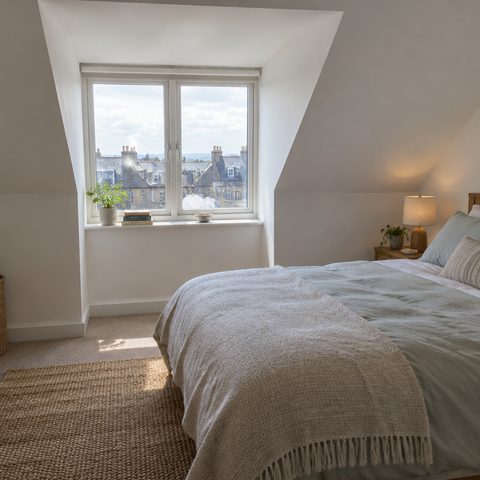
What is above the ceiling, street by street
What you have in the loft depends mostly on when your street was built.
- Fisherrow and the old town: stone cottages, terraces and some tenements, with traditional roofs and, in a tenement, a roof space only above the top floor.
- Victorian and Edwardian villas around Inveresk and the edges of the old town: tall roofs, slate on sarking and lofts that need careful ventilation.
- Post-war council estates on the east and west sides: conventional houses with open lofts, usually with a council-era layer and nothing since.
- Later private estates and the new housing at Wallyford: insulated when built, the older ones to well below today's depth.
- Converted lofts: the work moves to the slopes and dwarf walls as room in roof insulation.
Tenement flats in the town centre
In a tenement, only the top floor flat sits under the roof, and the roof space may be common property shared by the stair. Your title deeds decide. If you live on a lower floor, there is a neighbour's floor above you and nothing to insulate at ceiling level, and we will tell you that on the phone.
Where Musselburgh sits, and why that matters
Musselburgh lies about six miles east of Edinburgh city centre at the mouth of the Esk. The racecourse and Musselburgh Links, often described as the oldest golf course still in play, sit on the eastern side of town, and Newhailes House on the western side. With around 21,000 people it is the largest town in East Lothian, and it has grown again recently with new housing at Wallyford and on the edges of town.
The newest homes are insulated to modern standards and usually need little or nothing. If the survey shows yours is already close to full depth, we will say so and leave it there.
The older homes are a different story. A lot of Musselburgh houses have been in the same hands for decades, and the loft was last looked at under an old council or energy supplier scheme. Old insulation settles, and a layer that was 100mm when it went in is often nearer 60mm now.
Whichever kind of house you have, the survey starts by measuring the existing insulation. Topping it up is usually the cheapest energy efficiency upgrade in the house, needs no building warrant under the building regulations, and is something loft insulation installers should be able to price exactly once they have seen it. A loft ladder can be fitted at the same visit if the hatch is awkward.
Check for a grant before you pay anyone
We do not carry out grant-funded installations. We hold no scheme accreditation, so all of our work is paid for privately. If a scheme would cover your loft, an accredited installer is the better call, and we would rather say so here than after a survey.
- ECO4: funded by the energy companies, and it can cover the whole cost where someone in the household receives a qualifying benefit and the property is rated EPC D to G. It runs to 31 December 2026.
- Warmer Homes Scotland: the Scottish Government scheme for households in or at risk of fuel poverty.
- Home Energy Scotland grants and loans: for owner-occupiers, applied for through Home Energy Scotland rather than through an installer, and usually needing a current EPC that recommends the work.
- Great British Insulation Scheme: closed to new applications on 31 March 2026. Anyone still offering it is working from old information.
East Lothian Council and Home Energy Scotland can both tell you what applies in Musselburgh. Home Energy Scotland checks every route free on 0808 808 2282. Scheme rules change often, so check before you commit to anything.
Choosing a loft insulation installer in Musselburgh
Search for this in Musselburgh and most of what comes back is directories, trade listing sites and loft conversion firms. Those can be useful, but they will not tell you which installer actually goes into the loft before quoting. Four questions sort it out quickly:
- "Will someone look in the loft before giving a price?" A quote from the doorstep is a guess.
- "How deep is the insulation now, in millimetres?" Measured, not estimated.
- "What will you do at the eaves?" On a roof near the sea, that is where a cheap job goes wrong.
- "Can I have the price, scope and guarantee in writing?" Before any deposit.
Musselburgh is a short run from the city, and we cover it along with Edinburgh and the rest of East Lothian. We survey first, explain what the loft needs and quote in writing, and the team that quotes is the team that installs. Insured, trading since 2016, with our customer reviews published under the Easy-Sprayaway name.
Areas we cover around Musselburgh
- Musselburgh
- Fisherrow
- Inveresk
- Levenhall
- Wallyford
- Whitecraig
- Prestonpans
- Cockenzie
- Port Seton
- Tranent
- Macmerry
- Haddington
The work, filmed as it happens
Short clips from real jobs. Nothing staged, and nothing loads until you press play.
What people say after the survey
Our reviews are published on Trustpilot under Easy-Sprayaway, the other name we trade as.
“Ross showed me the video he took of my loft and explained his findings. I went for the Easy Quilt.”
“James McMillan came & completed a full survey of my loft space. Explained everything clearly & answered all my questions.”
“Rayan was very efficient and knowledgeable about the product. He explained the benefit of having the work done.”
Frequently asked questions
No. Loft insulation laid at ceiling level is internal and changes nothing anyone can see, so it needs no planning permission or building warrant, even in a conservation area. Rooflights, dormers and external wall insulation are different.
It changes the order. We check the roof first, because exposed roofs are more likely to have slipped slates or failing flashings, and insulation should not go under a roof that is letting water in. Then we insulate, keeping the eaves clear.
It depends on the loft area, what is already there and how easy the access is. A flat or a small terrace sits at the cheaper end and a large villa costs more. We survey first and give a fixed written price rather than a range.
For some households. ECO4 can cover the full cost where someone receives a qualifying benefit and the property is rated D to G, and Warmer Homes Scotland helps households in fuel poverty. We do not install under either scheme, so if you qualify you want an accredited installer. Home Energy Scotland is on 0808 808 2282.
It depends on your title deeds. Some make the roof space common property shared by the stair, others give it to the top floor. We establish which at survey, before anything is quoted, because work in a shared space may need the other owners to agree.
Yes. Boards laid straight onto the joists crush whatever is underneath. We can lift them, insulate to full depth and fit raised boarding on legs, so you keep the storage without losing the insulation.
Book a free Musselburgh loft survey
We go into the roof space, tell you what it needs and put a written quote in your hands. No pressure and no obligation.